
Introduction
The Constitution of India is one of the most comprehensive and progressive constitutions in the world. It lays down the legal, political, and philosophical framework upon which the Indian State functions. At the very beginning of this remarkable document lies the Preamble, an introductory statement that encapsulates the ideals, aspirations, objectives, and guiding principles of the Constitution.
The Preamble is often described as the “Soul of the Constitution,” “Key to the Constitution,” and “Identity Card of the Constitution.” Although it does not grant powers or impose legal obligations by itself, it provides the philosophical foundation upon which every constitutional provision rests. It reflects the vision of the framers and serves as a guiding beacon for constitutional interpretation.
The framers of the Constitution, led by Dr. B. R. Ambedkar and inspired by the Objectives Resolution introduced by Jawaharlal Nehru on 13 December 1946, sought to establish a nation founded upon democracy, liberty, equality, justice, and fraternity. These ideals were incorporated into the Preamble, which was adopted on 26 November 1949 and came into force on 26 January 1950.
Even after more than seventy-five years, the Preamble continues to influence judicial decisions, constitutional amendments, public policy, and democratic governance. It embodies the aspirations of over a billion citizens and remains the guiding philosophy behind India’s constitutional democracy.
This article examines each feature of the Indian Preamble in detail while explaining its constitutional significance, historical development, judicial interpretation, and practical implications.
Text of the Preamble
The Preamble reads:
“WE, THE PEOPLE OF INDIA, having solemnly resolved to constitute India into a Sovereign Socialist Secular Democratic Republic and to secure to all its citizens: Justice, social, economic and political; Liberty of thought, expression, belief, faith and worship; Equality of status and of opportunity; and to promote among them all Fraternity assuring the dignity of the individual and the unity and integrity of the Nation; In our Constituent Assembly this twenty-sixth day of November, 1949, do hereby Adopt, Enact and Give to Ourselves this Constitution.”
Every phrase carries constitutional significance.
1. “We, the People of India” – Popular Sovereignty
The opening words establish the most fundamental constitutional principle: the Constitution derives its authority from the people themselves.
Unlike colonial laws imposed by external rulers, the Indian Constitution was adopted by representatives of the people assembled in the Constituent Assembly. Thus, sovereignty ultimately resides with the citizens.
This principle establishes that:
- Government exists to serve the people.
- Public officials derive authority from constitutional institutions created by the people.
- Elections are the primary mechanism through which citizens exercise sovereignty.
- Constitutional amendments must preserve the people’s constitutional identity.
The phrase rejects the idea of hereditary sovereignty and embraces democratic constitutionalism.
Its importance extends beyond politics—it symbolizes that every citizen, irrespective of caste, religion, gender, language, or economic status, is an equal participant in nation-building.
2. Sovereign
The Preamble declares India to be a Sovereign nation.
Sovereignty means the State possesses supreme authority over its internal affairs and complete independence in external relations.
Internal Sovereignty
India has complete authority to:
- Enact laws.
- Govern its territory.
- Maintain law and order.
- Regulate commerce.
- Protect constitutional rights.
- Amend its Constitution through constitutional procedures.
No internal institution is superior to the Constitution.
External Sovereignty
Externally, sovereignty enables India to:
- Conduct foreign policy independently.
- Join international organizations.
- Enter treaties.
- Declare war or peace.
- Maintain diplomatic relations.
Membership in organizations such as the United Nations or WTO does not diminish India’s sovereignty because participation is voluntary.
Importance
Without sovereignty:
- Democracy cannot function.
- Constitutional supremacy becomes meaningless.
- National independence cannot be preserved.
3. Socialist
The word Socialist was inserted by the 42nd Constitutional Amendment Act, 1976 during the Emergency.
However, even before 1976, the Constitution reflected socialist ideals through:
- Directive Principles of State Policy.
- Land reform legislation.
- Labour welfare laws.
- Social justice provisions.
Indian socialism differs from classical Marxist socialism.
Instead of abolishing private property or establishing complete state ownership, India follows Democratic Socialism, balancing economic freedom with social welfare.
Objectives of Indian Socialism
- Reduction of poverty.
- Elimination of inequality.
- Welfare-oriented governance.
- Equal opportunities.
- Fair distribution of resources.
- Protection of weaker sections.
Examples include:
- Free education initiatives.
- Public healthcare schemes.
- Employment guarantee programmes.
- Food security legislation.
- Reservation policies.
The socialist principle seeks inclusive development rather than equal income.
4. Secular
The Preamble declares India to be a Secular Republic.
The term was also inserted by the 42nd Constitutional Amendment Act, 1976, although secular principles already existed in the Constitution through Fundamental Rights.
Indian secularism differs from Western secularism.
Rather than maintaining complete separation between religion and State, India follows the principle of equal respect for all religions.
The State:
- Has no official religion.
- Cannot discriminate on religious grounds.
- Protects religious freedom.
- May regulate secular activities associated with religion.
- May intervene to eliminate social evils.
Citizens enjoy:
- Freedom of conscience.
- Freedom to profess religion.
- Freedom to practice religion.
- Freedom to propagate religion.
The secular character promotes peaceful coexistence in one of the world’s most religiously diverse societies.
5. Democratic
India is a Democratic Republic.
Democracy literally means “rule by the people.”
Indian democracy operates through representative democracy, where citizens elect representatives to legislate on their behalf.
Key features include:
- Universal adult suffrage.
- Periodic elections.
- Secret ballot.
- Independent Election Commission.
- Multi-party political system.
- Responsible government.
- Parliamentary accountability.
- Judicial review.
- Protection of Fundamental Rights.
Democracy also implies political equality.
Every citizen has:
- One vote.
- Equal voting power.
- Equal eligibility to contest elections subject to constitutional qualifications.
Democracy extends beyond elections to include transparency, participation, accountability, and constitutional governance.
6. Republic
A Republic is a State whose Head of State is elected rather than hereditary.
India’s President is elected indirectly for a fixed term.
This feature ensures:
- Equality of opportunity.
- No hereditary political privilege.
- Public accountability.
- Constitutional legitimacy.
The republican principle reinforces democratic values by making public offices accessible to eligible citizens.
7. Justice
Justice occupies the foremost place among constitutional objectives.
The Constitution seeks to establish justice in three dimensions.
Social Justice
Social justice aims to eliminate discrimination arising from caste, religion, gender, race, or social status.
Measures include:
- Abolition of untouchability.
- Reservation policies.
- Equal protection laws.
- Welfare legislation.
Economic Justice
Economic justice seeks to reduce inequality.
The Constitution encourages:
- Fair wages.
- Social security.
- Prevention of exploitation.
- Equitable distribution of wealth.
- Welfare measures.
Political Justice
Political justice ensures equal political participation.
Every eligible citizen enjoys:
- Right to vote.
- Equal electoral opportunity.
- Eligibility for public office.
- Equal participation in democratic governance.
Justice forms the foundation upon which all other constitutional values rest.
8. Liberty
The Preamble guarantees liberty of:
- Thought
- Expression
- Belief
- Faith
- Worship
Liberty enables individuals to develop intellectually, morally, spiritually, and socially.
However, liberty is not absolute.
Reasonable restrictions may be imposed for:
- National security.
- Public order.
- Morality.
- Decency.
- Friendly relations with foreign States.
- Prevention of crime.
Constitutional liberty balances individual freedom with societal interests.
9. Equality
Equality is one of the cornerstones of constitutional democracy.
The Preamble guarantees:
- Equality of status.
- Equality of opportunity.
This principle rejects arbitrary discrimination while permitting affirmative action to achieve substantive equality.
Constitutional equality includes:
- Equality before law.
- Equal protection of laws.
- Equal employment opportunities.
- Equal political rights.
- Equal access to justice.
Equality ensures that constitutional rights are enjoyed without discrimination.
10. Fraternity
Fraternity refers to brotherhood, mutual respect, solidarity, and national unity.
India’s immense diversity makes fraternity indispensable.
Fraternity encourages:
- Religious harmony.
- Linguistic tolerance.
- Cultural coexistence.
- Mutual respect.
- National integration.
Without fraternity, liberty and equality cannot flourish.
11. Dignity of the Individual
The Constitution recognizes every human being as inherently valuable.
Human dignity underlies many constitutional rights, including:
- Right to life.
- Privacy.
- Education.
- Equality.
- Freedom.
The State has a constitutional obligation to protect and promote conditions that enable individuals to live with dignity.
12. Unity and Integrity of the Nation
Originally, the Preamble referred only to the “Unity of the Nation.”
The 42nd Constitutional Amendment Act, 1976 added the word “Integrity.”
Unity signifies national cohesion despite diversity.
Integrity emphasizes safeguarding India’s territorial, political, and constitutional unity against divisive forces.
Together, they reinforce national solidarity while respecting federalism and cultural diversity.
Judicial Importance of the Preamble
The Supreme Court has repeatedly relied on the Preamble to interpret constitutional provisions.
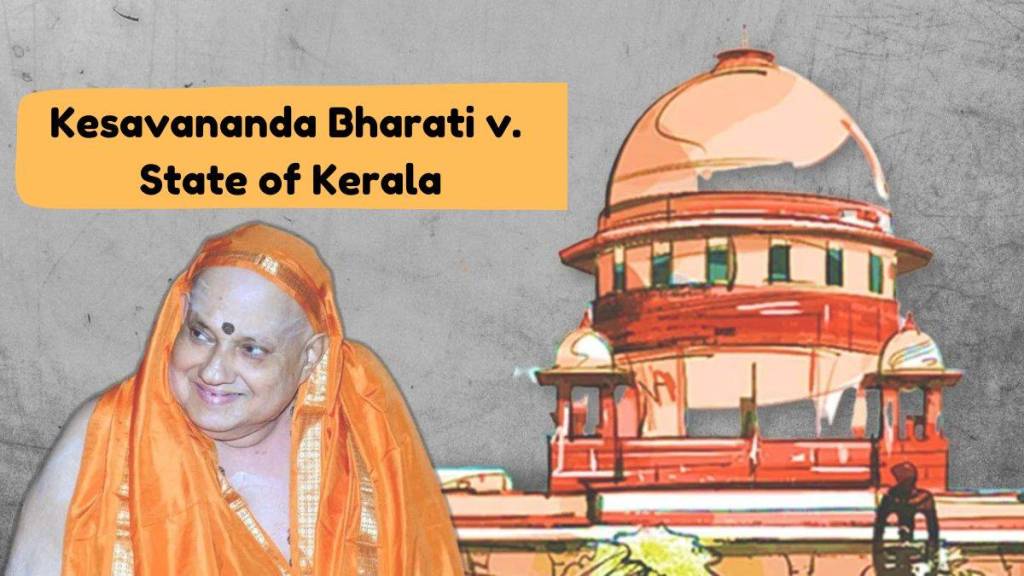
In Kesavananda Bharati v. State of Kerala (1973), the Court held that the Preamble is part of the Constitution and reflects its basic structure. Although it is not independently enforceable, it serves as an important aid in constitutional interpretation.
The ideals expressed in the Preamble have also informed judicial decisions concerning fundamental rights, constitutional amendments, secularism, democracy, and the rule of law.
Significance of the Preamble
The Preamble performs several constitutional functions:
- Explains the philosophy of the Constitution.
- States the objectives of constitutional governance.
- Guides courts in interpreting constitutional provisions.
- Reflects the aspirations of the people.
- Serves as the moral foundation of the Indian State.
- Reinforces democratic values and constitutional morality.
- Helps preserve the basic structure of the Constitution.
It continues to influence legislation, judicial reasoning, public policy, and constitutional discourse.
Conclusion
The Preamble is far more than an introduction to the Constitution—it is the philosophical charter of the Indian Republic. Every word has been carefully chosen to reflect the aspirations of a newly independent nation committed to democracy, justice, liberty, equality, and fraternity.
The ideals enshrined in the Preamble are not merely symbolic; they guide the functioning of every constitutional institution and shape the interpretation of laws. As India continues to evolve socially, politically, and economically, the Preamble remains a timeless reminder of the nation’s constitutional vision and democratic commitments.
Understanding the features of the Indian Preamble is therefore essential not only for law students and legal professionals but also for every citizen who seeks to appreciate the values upon which the Republic of India is founded.



 Urban Flame
Leave a comment